
The Open Road
Why Pakistan is made for the road trip
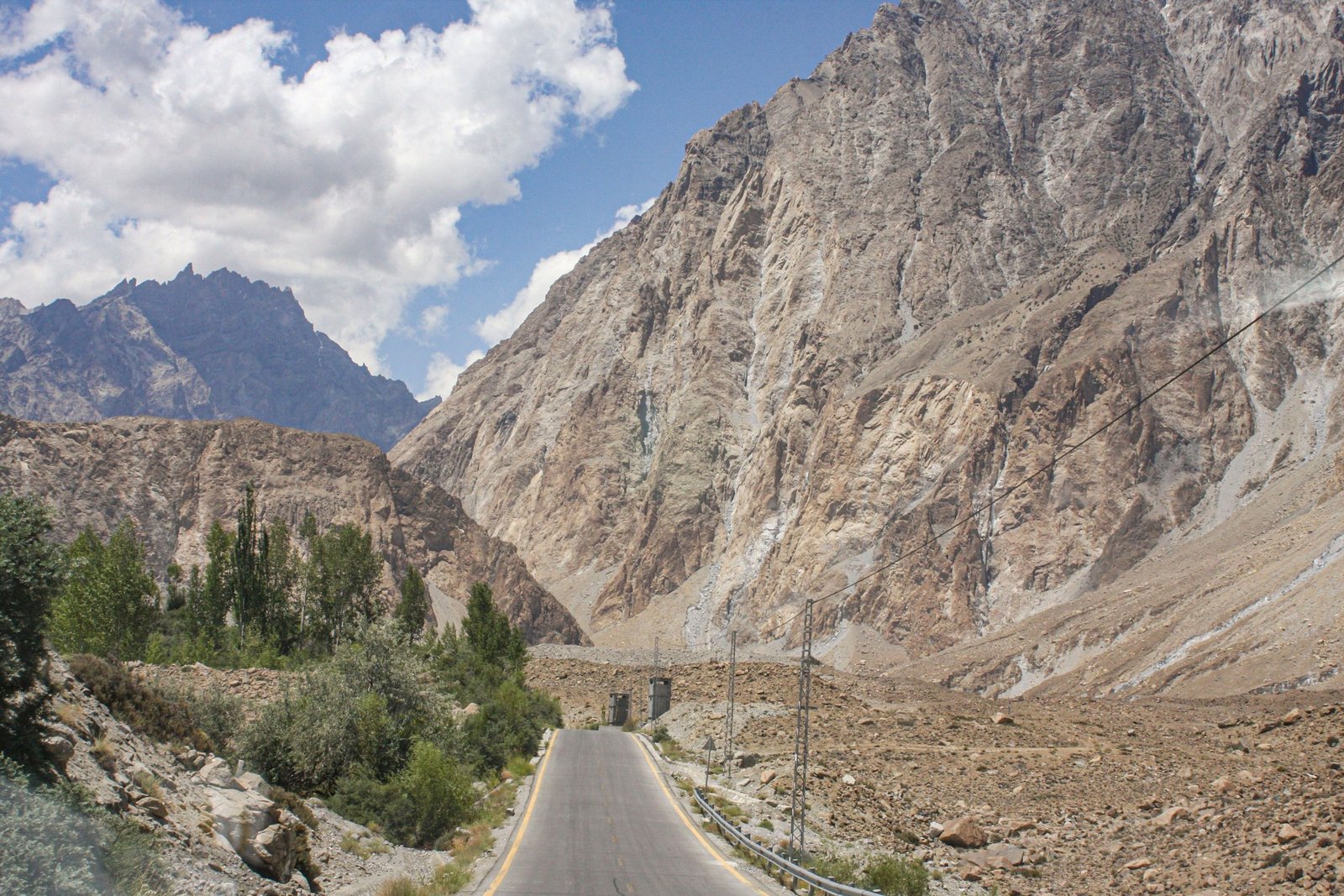
There are countries that are best understood from a city street, a railway carriage or the window of a hotel. Pakistan is different. Here, the road itself often becomes the destination.
A journey across the country can move from the ordered avenues of Islamabad to the foothills of the Himalayas, through river valleys, pine forests and mountain passes, before eventually reaching landscapes so vast that even the longest drives begin to feel worthwhile.
For travellers prepared to take their time, Pakistan offers one of Asia’s great overland experiences. Not because every road is easy. Quite the opposite.
The attraction lies in the scale of the landscape, the unpredictability of the journey and the constant sense that the next bend may reveal something completely different.
Islamabad: where the road begins
For many journeys through northern Pakistan, Islamabad is the natural starting point. The capital offers an unusually calm introduction to the country.
Broad avenues run beneath the Margalla Hills, neighbourhoods feel spacious and green, and the city provides the chance to prepare before heading towards more demanding terrain. It is worth resisting the urge to leave immediately. A road trip works best when it starts slowly.
Spend a day in the capital. Adjust to the rhythm of the country. Eat well. Check the weather. Confirm the route. Then head north. Within a surprisingly short distance, Pakistan begins to change. The urban landscape recedes. Mountains appear on the horizon. And the journey starts to feel considerably bigger.
The road becomes the experience
Pakistan’s great road trips are rarely about covering distance efficiently. They are about what happens between one destination and the next. A journey that looks straightforward on a map may include sections of rough road, mountain traffic, weather delays and spontaneous stops.
That should be expected rather than treated as an inconvenience. There may be tea beside a river. A viewpoint with no name. A roadside restaurant that becomes one of the best meals of the trip. A village that encourages an unplanned stop. Or a mountain appearing through the clouds at exactly the right moment.
This is what makes road travel through Pakistan distinctive. The itinerary provides direction. The road provides the story.
“In Pakistan, getting there is rarely just a transfer. It is often one of the most memorable parts of the journey.”
Into Kaghan
From Islamabad, the journey towards the Kaghan Valley offers one of the most accessible introductions to Pakistan’s northern landscapes. The route climbs gradually towards Balakot, where the mountains begin to take over. Beyond here, the scenery changes quickly. Rivers follow the road. Valleys narrow.
Forested hillsides rise sharply from the landscape. And places such as Kiwai, Shogran and Naran begin to feel far removed from the capital left behind earlier in the journey. This is not yet the severe mountain scenery of the Karakoram. Kaghan is greener. Softer. More intimate. But no less impressive.
Shogran: leave the main road behind
Some of Pakistan’s best road-trip moments occur when you leave the main highway. Shogran is a perfect example. The route climbs sharply through forested slopes before emerging into a mountain settlement overlooking the surrounding valleys. From here, further exploration towards Siri Paye adds another dimension to the journey.
The landscape opens into alpine meadows, high ridges and distant snow-covered peaks. The road may be rougher. The journey may be slower. But this is precisely the point. A good road trip should occasionally make you work for the view.
Naran and the upper Kaghan Valley
Continuing towards Naran, the road follows the Kunhar River deeper into the valley. Naran is lively during the main season and works well as a base for exploring the surrounding region. But the strongest road-trip experience lies beyond the town. Travel north and the landscape becomes increasingly dramatic. Batakundi. Jalkhad.
Lulusar Lake. Mountain passes and long stretches of road where settlements become increasingly sparse. The further you drive, the more the scale of northern Pakistan begins to reveal itself. There are moments when the road seems almost insignificant against the mountains surrounding it.
That sense of scale is difficult to recreate anywhere else.
The Karakoram Highway
No discussion of driving through Pakistan can ignore the Karakoram Highway. It is one of the world’s great mountain roads. Connecting Pakistan with China, the highway cuts through some of the most formidable terrain on the planet. But describing it simply as a road misses the point.
The Karakoram Highway is a journey through geology, culture and geography on an extraordinary scale. Rivers run alongside the route. Rock faces rise almost vertically from the road. Villages appear in pockets of fertile land. And above everything are the mountains.
For many travellers, this road becomes the backbone of a northern Pakistan itinerary.
Hunza: the road opens up
Arriving in Hunza provides one of the great rewards of an overland journey through northern Pakistan. The valley offers a dramatic change of scale. Terraced villages sit beneath enormous peaks. The road passes historic settlements, viewpoints and stretches of landscape where the mountains seem close enough to touch.
Karimabad provides an excellent base, but the road continues north. Passu. Gulmit. Attabad Lake. The famous Passu Cones. Each stop has a different character. And because they are linked by road, the journey feels continuous rather than fragmented. This is the advantage of travelling overland.
You see how one landscape becomes another.

Attabad: a road trip transformed by the landscape
Attabad Lake is now one of northern Pakistan’s most recognisable sights. Its striking turquoise water sits beneath steep mountains along the Karakoram Highway. Yet the lake is also part of the region’s modern history.
Its creation dramatically altered the local landscape and required new roads and tunnels to reconnect communities along the highway. Today, travelling through the tunnels beside the lake is one of the most memorable stretches of the route. It is a reminder that Pakistan’s roads are not simply infrastructure.
They are part of an evolving landscape.
South again, but never the same way
The temptation on a road trip is to think only about reaching the furthest point. But the return journey matters just as much. Light changes. Weather changes. Places that passed quickly on the outward journey can feel completely different on the way back. This is especially true in mountain regions.
A valley seen in morning cloud may look entirely different under evening light. A viewpoint passed on the way north may deserve a longer stop on the return. Road travel allows that flexibility. It encourages you to revisit rather than simply move on.
Lahore: trade mountains for history
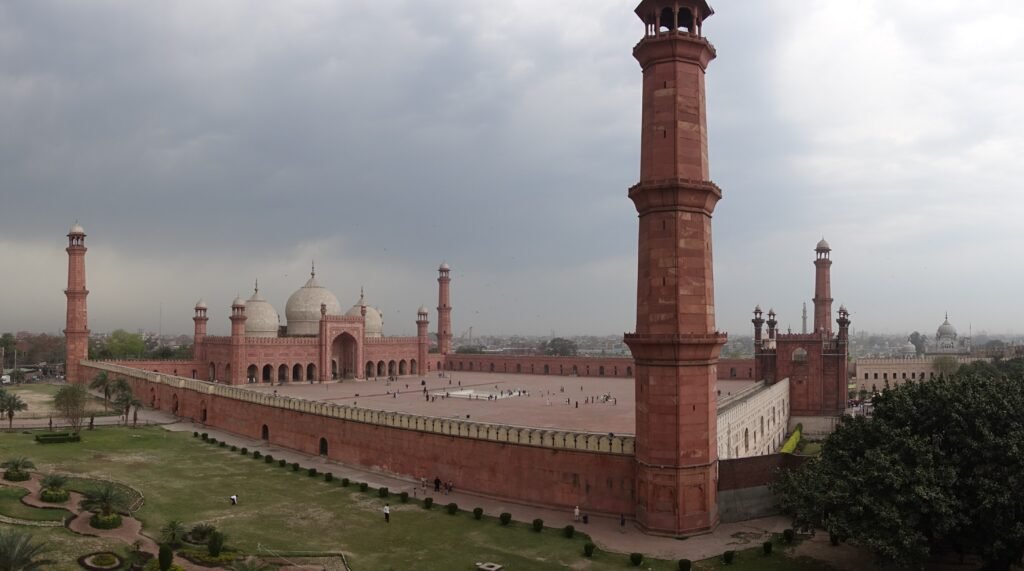
A Pakistan road trip need not end in the north. Heading south towards Lahore offers a complete change of pace. The mountains disappear. The roads become busier. And the journey moves from nature towards history, food and city life. Lahore feels like a fitting counterpoint to northern Pakistan.
Where the north offers silence and scale, Lahore offers movement and intensity. Mughal architecture. Old neighbourhoods. Markets. Restaurants. Traffic. History layered upon history. The contrast is part of what makes an overland journey through Pakistan so rewarding. You do not simply visit different places.
You experience different versions of the country.
Road trips require restraint
The most common mistake when planning a Pakistan road trip is trying to cover too much. Distances on a map can be misleading. Mountain roads take time. Traffic can slow progress. Weather can alter plans. And stopping for photographs, food or tea is part of the point. The best itineraries therefore include breathing room.
Avoid turning every day into a transfer. Stay two or three nights in key locations. Allow time for detours. And never assume that a five-hour journey will remain five hours. In Pakistan, flexibility is one of the most useful things you can pack.
Driver, car or self-drive?
For many international travellers, hiring a car with a local driver is the most practical way to experience a Pakistan road trip. A knowledgeable driver can be valuable on unfamiliar mountain roads and can help with changing conditions, route decisions and local logistics.
Self-driving may appeal to more experienced travellers, but road conditions, traffic patterns and mountain routes can make it considerably more demanding. Either way, the vehicle matters. For major highways, a standard car may be sufficient. For higher, rougher or unpaved mountain routes, a 4×4 or local jeep may be required.
The correct vehicle is not simply about comfort. In some parts of Pakistan, it determines where you can go.
The essentials
A well-planned Pakistan road journey should always leave room for the practical details. Carry cash, particularly outside larger towns. Download offline maps. Keep water and snacks in the vehicle. Carry a power bank. Check weather and road conditions before travelling into mountainous regions.
And avoid building itineraries around exact arrival times where possible. Mobile coverage can vary considerably. Fuel stations become less frequent in remote areas. And facilities may become simpler the further you travel from the main towns. None of this should discourage travellers. It simply rewards preparation.
Why the road matters
Air travel can shorten distances. A flight can turn a long journey into an hour. Sometimes that is exactly what an itinerary requires. But something is lost. From the air, the dramatic transitions disappear. You do not see the river beside the road. The roadside villages. The gradually changing architecture. The tea stops.
The mountains growing larger through the windscreen. The moments when the driver slows because everyone has noticed the same view. Road travel gives Pakistan context. It connects the places in between. And in a country defined so strongly by geography, that matters.
Take the slower route
The best road trips are not races. Pakistan makes that particularly clear. The country rewards travellers willing to abandon the idea that every hour must be productive. Sometimes an extra stop is worthwhile. Sometimes a road deserves to be driven simply because of where it goes.
And sometimes a destination that looked secondary on the itinerary becomes the place you remember most. The great appeal of travelling Pakistan by road is not simply the freedom to move. It is the ability to notice. The mountains. The rivers. The towns. The people.
And the constantly changing landscape unfolding beyond the windscreen. In Pakistan, the road does more than connect destinations. It reveals the country between them.
Make the road part of your plan.
Choose a route with time to stop, a base you will enjoy returning to and transport that suits the terrain. These guides bring the practical decisions together.